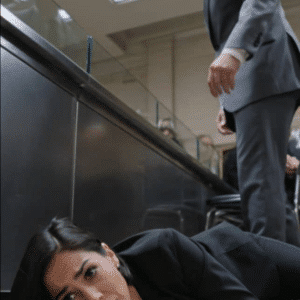
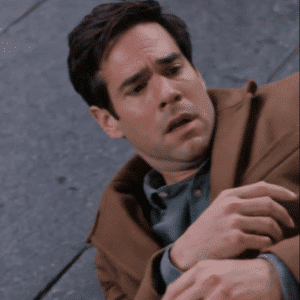
Act I
The boy grabbed her coat just hard enough to make her turn.
Not hard enough to hurt her.
Hard enough to be noticed by a woman who had spent her whole life learning how not to notice people like him.
“Excuse me!”
The young woman spun around beneath the string lights, one hand flying to the gold chain of her shoulder bag.
“Don’t touch me!”
The words came out sharper than she intended.
But the city had trained her well.
Keep your bag close. Do not stop for strangers. Do not let anyone pull you into a story on a dark sidewalk, especially not a child with dirty hands and desperation in his eyes.
The boy let go immediately.
He looked no older than nine, maybe ten if hunger had made him smaller. His gray long-sleeved shirt was torn at one cuff. Dirt smudged his cheek. Soot darkened the space beneath his jaw, as if he had slept somewhere too close to smoke, engines, or the underside of the city.
Behind him, people flowed around them without slowing.
Couples moved toward restaurants. Office workers crossed beneath glowing shop signs. A street musician played something soft near the corner. Warm decorative lights hung above the sidewalk, turning the street almost beautiful if you did not look too closely.
The woman did look.
That was the problem.
For one second, her anger weakened.
Then the boy lifted his hand.
In his palm lay a small golden pin shaped like a leaf, delicate and old-fashioned, with tiny blue gemstones set along the center vein.
The woman stopped breathing.
The same pin rested on her lapel.
Her fingers moved to it before she could stop them.
The boy saw.
“But,” he said, confused by her fear, “you have the same pin.”
She stared at the one in his hand.
The golden leaf. The blue stones. The slight bend at the tip, almost invisible unless you knew it was there.
Her grandmother had called it a family piece.
A pair, once.
One for each daughter.
But there had not been two daughters for twenty-four years.
“What are you talking about?” she asked.
Her voice had changed.
The boy noticed that too.
He held the pin higher, like proof in a trial no one else on the sidewalk knew was happening.
“My mom has the same one.”
The woman shook her head slowly.
“That’s impossible.”
The word sounded foolish the moment she said it.
The city did not care about impossible. It swallowed people daily and returned them years later in forms no one recognized.
The boy looked into her eyes.
Not pleading now.
Certain.
“She said the woman with the other pin is my mother’s sister.”
The sidewalk disappeared beneath her.
For a moment, Sophia Vale heard nothing. Not the taxis. Not the laughter spilling from the restaurant behind her. Not the violin from the corner or the murmur of pedestrians brushing past.
Only one name, locked away in the oldest room of her heart.
Isabel.
Her sister had vanished when Sophia was six years old.
Everyone in the Vale family had a version of the story.
Her father said Isabel had been taken by a stranger and likely died before the police found a trail. Her mother said nothing because grief emptied her until silence became the only language she had left. Her grandfather said the world was cruel and money could not protect every child.
But Sophia had remembered something none of them wanted to hear.
A fight.
A storm.
Her father’s voice.
Isabel crying near the back stairs.
Then a car leaving after midnight.
Sophia had been told for years that memory could lie.
Now a filthy boy stood in front of her holding the matching pin that should have been buried with a ghost.
She took one small step closer.
“What is your mother’s name?”
The boy hesitated.
His fingers closed around the pin.
“She told me not to tell anyone unless they had the other leaf.”
Sophia reached slowly to her lapel and unclipped her own pin.
Her hands trembled.
The boy watched as she placed it beside his in her palm.
Two golden leaves.
Two lines of blue stones.
A matched set.
The boy’s face changed with relief so sudden it almost broke her.
“Her name is Isabel,” he whispered.
Sophia gripped the pins so tightly their edges cut into her skin.
Behind her, the restaurant door opened and spilled warmth onto the pavement.
But Sophia felt cold all the way through.
“Where is she?” she asked.
The boy’s mouth trembled.
“She said if I found you,” he said, “you would know why they kept her away.”
And Sophia understood with terrifying clarity that this was not a reunion.
It was a warning.
Act II
Sophia Vale had been raised in a house where grief was polished until it looked like dignity.
The Vale mansion sat on a hill above the city, hidden behind iron gates, cypress trees, and the kind of silence money buys when it has something to hide. The family had built its fortune in shipping, luxury hotels, and private banking. Their name appeared on museum plaques and hospital wings. Their scandals, when they happened, appeared nowhere.
Her sister Isabel was older by ten years.
To Sophia, Isabel had been more than a sister. She had been sunlight with a voice.
Isabel knew where the cook hid extra cookies, which hallway floorboards creaked, and how to sneak into the forbidden attic without getting caught. She braided Sophia’s hair before school. She made shadow puppets during thunderstorms. She told stories about two princesses who escaped a castle not because they hated it, but because castles were terrible places to grow wings.
Their father, Vincent Vale, hated those stories.
He did not raise daughters.
He managed heirs.
Isabel was supposed to marry well, smile at galas, and help soften the family’s public face. But by seventeen, she had become difficult in the way honest girls become difficult inside dishonest homes.
She asked where the servants went when they were dismissed.
She asked why her father’s drivers never used the front entrance.
She asked why one of the family’s hotels had closed after a fire and reopened under another company’s name.
Then she fell in love with a man Vincent called unsuitable.
His name was Mateo Cruz.
He worked as an apprentice mechanic in the garage that serviced the Vale fleet. He had dark eyes, grease under his nails, and the audacity to treat Isabel like her laughter mattered more than her last name.
Sophia remembered him vaguely.
A young man kneeling beside a car, handing her a small paper crane when she cried because her doll broke. Isabel had smiled at him in a way Sophia did not understand then.
Her father understood.
That was enough.
The fighting began after that.
Doors slammed. Voices lowered when Sophia entered rooms. Isabel stopped eating dinner with the family. Her mother, Helena, cried quietly behind closed doors but never contradicted Vincent in public.
Then came the night of the storm.
Sophia remembered rain hammering the windows.
She remembered waking thirsty and walking barefoot toward the kitchen.
She remembered Isabel near the back stairs with a small suitcase in her hand.
Her sister was crying.
Vincent stood in front of her.
“You will destroy this family,” he said.
Isabel answered, “No. You already did.”
That was the last full sentence Sophia remembered hearing from her.
The next morning, Isabel was gone.
The house filled with police, investigators, whispers, and staged sorrow. Vincent announced that his daughter had disappeared after being manipulated by a dangerous young man. Mateo Cruz vanished too, which made the story easy to believe.
For years, Sophia thought he had taken her.
That was what everyone told her.
Mateo took Isabel.
Mateo ruined everything.
Mateo was the reason her mother stopped singing and her father locked the gates earlier each night.
But grief has a way of aging into suspicion.
When Sophia turned sixteen, she found a box hidden beneath loose floorboards in Isabel’s old room. Inside were letters Mateo had written her sister. Not the words of a predator. Not the plans of a criminal. Just two young people trying to imagine a life where no one owned them.
One letter contained a line that stayed with Sophia forever.
Your father is not afraid I will steal you. He is afraid you will tell what you saw.
Sophia took the letter to her mother.
Helena read it.
Then folded it with shaking hands and said, “Never mention this again.”
That was when Sophia knew.
Her family had not lost Isabel in a tragedy.
They had buried her in a story.
As an adult, Sophia became everything the Vale family wanted and feared.
Educated. Elegant. Publicly useful.
She sat on charity boards, gave speeches, attended openings, and smiled beside her father while cameras flashed. But privately, she searched. Quietly at first. Then obsessively.
Every record led nowhere.
Mateo Cruz had no death certificate, no employment trail, no bank account after the year Isabel disappeared. Isabel’s passport had never been used. Police files were thin in places they should have been thick. Witness statements contradicted each other, yet every contradiction somehow supported Vincent Vale.
Then, one year before the boy grabbed her coat, Sophia found something in an old family safe.
A photograph.
Isabel, maybe eighteen, standing near a cheap motel sign with one hand over her stomach.
Pregnant.
On the back, written in her mother’s handwriting, were two words.
Forgive me.
Sophia confronted Helena that night.
Her mother looked at the photograph and finally broke.
“Your father said she chose exile,” Helena whispered. “He said if we tried to find her, Mateo would expose everything. He said the baby would be used against us.”
“What baby?” Sophia demanded.
Helena could barely speak.
“I don’t know. I never knew if she kept it. I was too afraid to ask.”
Sophia hated her father then.
But she hated something else more.
The possibility that somewhere, her sister had been alive all along, waiting for a family that chose reputation over rescue.
And now Isabel’s son stood beneath city lights, holding the other golden leaf.
Act III
The boy’s name was Leo.
He told Sophia only after she took him into a small bakery and bought him soup, bread, and hot chocolate with extra whipped cream because she did not know what else a child might need after handing someone the past.
He ate like he expected each bite to be taken back.
Sophia noticed.
She noticed everything now.
The way he sat facing the door. The way he kept the golden pin under his palm even while eating. The way he flinched when a waiter dropped a tray near the espresso machine.
She took off her trench coat and placed it gently over the chair beside him.
“I’m not going to hurt you,” she said.
Leo looked at her over the rim of the cup.
“People say that.”
Sophia’s throat tightened.
“Yes,” she said. “They do.”
That answer seemed to earn her more trust than a promise would have.
He finished the soup before speaking again.
“My mom said your name is Sophia.”
Sophia nodded.
“She said you were little when they took her away.”
“When who took her away?”
Leo looked down.
“The men from the big house.”
The bakery noise faded around her.
“What big house?”
“The one with the black gate and the stone lions.”
The Vale estate.
Sophia pressed her fingers against her napkin until it tore.
Leo continued in pieces.
His mother had raised him in rooms that never lasted long. Motels. Basement apartments. A trailer behind a closed gas station one winter. She worked where no one asked for papers too carefully: laundries, late-night kitchens, cleaning offices after everyone else went home.
She did not speak much about her family.
Only that she had a sister.
Only that the sister had another golden leaf.
Only that if anything happened, Leo should find her.
“What happened?” Sophia asked.
Leo’s lower lip trembled.
“She got scared last week.”
“Of what?”
He glanced toward the window.
Sophia turned instinctively.
Outside, people moved past the glass in waves. A man in a dark coat paused near the curb, phone pressed to his ear. Nothing unusual. Everything suspicious.
Leo leaned closer.
“She saw someone from before.”
“From the big house?”
He nodded.
“She said his name was Conrad.”
Sophia went still.
Conrad Vane.
Her father’s head of private security for as long as she could remember. A man with silver hair, a narrow smile, and a gift for appearing in rooms just before someone made a mistake.
Sophia had known him since childhood.
He had walked her to school after Isabel vanished.
He had stood beside the door at her mother’s funeral.
He still served Vincent Vale.
“What did Conrad do?” she asked.
Leo pulled a folded piece of paper from inside his sleeve.
Not pocket.
Sleeve.
A hiding place learned through practice.
He handed it to her.
The paper was a note written in uneven, hurried handwriting.
Sophie,
If he found me, he will find Leo too. I should have come to you sooner, but I did not know if you were still his daughter before you were my sister.
That line nearly undid her.
Sophia kept reading.
I have proof of what Father did. Not just to Mateo and me. To the families from the hotel fire. To the workers he paid to disappear. Mateo died trying to protect the records. I kept what he saved. Father knows now. Conrad came looking.
If Leo reaches you, believe him before you call anyone.
Do not go to the police station on Mercer.
Do not trust Father’s lawyers.
Look inside the blue stone.
Sophia stopped.
Her eyes moved to the pin in Leo’s hand.
“The blue stone?”
Leo nodded.
“Mom said the leaf remembers.”
Sophia took her own pin and turned it over.
The gemstones looked decorative, tiny blue chips set into gold. But Isabel’s pin had always been the original. Sophia’s had been made later, after she was born, to match.
She looked at Leo’s.
One blue stone near the stem was slightly raised.
Carefully, with her thumbnail, Sophia pressed it.
A hidden clasp released.
The back of the pin opened.
Inside was a strip of microfilm so thin it looked like a shadow.
Sophia stared at it.
Isabel had carried evidence in a piece of jewelry their father thought was sentimental.
A sound halfway between a laugh and sob escaped her.
“My sister,” she whispered.
Leo looked at her with sudden fear.
“Is it bad?”
“No,” Sophia said, closing the pin gently. “It means your mother is smarter than all of them.”
For the first time, Leo almost smiled.
Then his face collapsed again.
“She told me to wait by the old theater if she didn’t come back.”
“When was that?”
“Yesterday.”
Sophia stood too quickly.
The chair scraped behind her.
Leo grabbed the bread from the table and shoved it into his sleeve.
The gesture broke her heart all over again.
“Leo,” she said. “You don’t have to hide food from me.”
He froze, ashamed.
Sophia took another roll from the basket and handed it to him.
“Take two,” she said. “We’re going to find your mother.”
He stared at her.
“Really?”
Sophia clipped both golden pins onto the inside of her coat, close to her heart.
“Yes,” she said. “But first, we make sure my father knows he has finally run out of daughters to silence.”
Act IV
Sophia did not call the police station on Mercer.
She called Mara Chen.
Mara had been an investigative attorney before becoming the kind of private counsel wealthy families hated because she understood both the law and the rooms where people learned how to bend it. Sophia had hired her secretly six months earlier, when her questions about Isabel began touching names her father still paid.
Mara answered on the second ring.
“I found Isabel’s son,” Sophia said.
Silence.
Then Mara’s voice changed.
“Where are you?”
“Downtown. Bakery on Ellis Street.”
“Stay visible. Do not go home. Do not contact your father.”
Sophia looked out the window again.
The man in the dark coat was still there.
Too still.
“I think someone is watching us.”
“Then leave through the kitchen,” Mara said. “Now.”
Sophia took Leo’s hand.
He resisted instinctively, then let her hold him.
They moved through the back of the bakery after Sophia pressed cash into the startled owner’s hand and asked for the service exit. Rain had started outside, soft at first, turning the alley into a ribbon of reflected neon.
Mara’s car arrived six minutes later.
She did not ask questions until they were moving.
Leo sat between Sophia and the door, clutching the bread.
Mara looked at him through the rearview mirror.
“You’re Leo?”
He nodded.
“I’m Mara. I helped your aunt look for your mother.”
Leo looked at Sophia.
“Aunt?”
The word struck the car like a tiny bell.
Sophia swallowed.
“Yes,” she said softly. “I’m your aunt.”
Leo stared at her for a long moment.
Then he looked away quickly, as if accepting that might hurt too much if it disappeared.
Mara drove them to a safe apartment above her law office. Only then did she examine the pin.
When she extracted the microfilm, her expression hardened.
“This is older than I expected,” she said.
“What is it?”
“Insurance.”
Under magnification, the images became documents. Copies of ledgers. Payment records. Names of city inspectors, fire marshals, shell companies, and private contractors connected to the Vale Hotel fire twenty-five years earlier.
Sophia knew the public version.
An electrical fault. Twelve dead. Settlements paid quietly. The building demolished. The Vale Group praised for its charitable fund afterward.
The microfilm told another story.
The hotel had failed multiple safety inspections. Emergency exits were chained to prevent theft. Renovations had been delayed to protect quarterly earnings. After the fire, witnesses were paid off. Two workers who threatened to testify disappeared into immigration detention records and never reappeared.
Mateo Cruz had found proof.
Isabel had helped him copy it.
Vincent had found out.
Mara turned to Leo.
“Did your mother say where the rest is?”
Leo nodded.
“The old theater.”
Sophia frowned.
“What theater?”
“The one with the broken angel sign.”
Mara looked up sharply.
“The Rialto.”
The Rialto Theater had been abandoned for years. Sophia remembered driving past it as a child, its cracked marquee still showing the outline of a winged statue above the entrance.
Her father owned it through a subsidiary.
Of course he did.
They went before dawn.
Mara refused to let Sophia come at first.
Sophia refused harder.
Leo, small and silent in the back seat, held the pin like a prayer.
The Rialto stood at the edge of a redevelopment district, surrounded by fencing and warning signs. Its angel sign hung crooked above the entrance, one wing broken, the other catching the pale gray light before sunrise.
Inside, the air smelled of dust, mold, and old velvet.
Leo led them through the lobby.
“She said if I ever got lost, stand under the angel and count seven doors.”
They counted.
The seventh door led to a projection room.
At first, it looked empty.
Then Leo knelt near the wall and removed a loose baseboard with fingers that knew exactly where to press.
Inside was a metal box.
Sophia opened it.
Photographs. USB drives. A stack of letters. A birth certificate for Leonardo Mateo Cruz Vale.
And another for a child who had not survived.
Sophia’s hand trembled.
A baby girl.
Born two years before Leo.
Died at three months.
No hospital name.
No cause listed.
A tiny bracelet was folded inside the paper.
Isabel had lost a child while hiding from a father rich enough to light buildings on fire and call it accounting.
Sophia pressed the bracelet to her mouth and closed her eyes.
Then Leo whispered, “Aunt Sophia.”
She turned.
A sound came from below.
Footsteps.
Mara reached into her jacket.
The door opened before she could draw.
Conrad Vane stood in the doorway with two men behind him.
His silver hair was neat. His coat dry despite the rain. His smile exactly as Sophia remembered it.
“Miss Vale,” he said. “Your father is worried sick.”
Sophia stood, placing herself in front of Leo.
“No,” she said. “He’s worried caught.”
Conrad sighed.
“You always did have Isabel’s dramatic instincts.”
Mara lifted her phone.
“This entire conversation is being recorded and uploaded live to three separate servers.”
Conrad’s smile faded.
Only slightly.
“Then allow me to speak carefully. The child is being exploited. The documents were stolen. Your sister, if alive, is mentally unstable and has been so for years.”
Leo shouted, “She’s not!”
Sophia reached back to steady him.
Conrad’s eyes moved to the metal box.
“That belongs to Mr. Vale.”
“No,” Sophia said. “This belongs to the people he buried.”
For the first time, Conrad looked annoyed.
“Your father protected you from ugliness your whole life.”
Sophia stepped closer.
“He protected himself from consequences.”
The men behind Conrad shifted.
Mara’s voice cut in.
“Before anyone makes a stupid decision, you should know federal agents are ten minutes out.”
Conrad looked at her.
“Are they?”
Mara smiled.
“No. Five.”
That was when Isabel appeared behind them.
At the far end of the projection room hallway, thin, exhausted, rain-soaked, and holding herself upright with one hand on the wall.
Sophia knew her instantly.
Not because she looked the same.
She did not.
Time had carved her. Fear had sharpened her. Her brown hair was streaked with gray, her face drawn from hunger and years of running.
But her eyes were Isabel’s.
The same eyes that once told stories about princesses growing wings.
Leo broke past Sophia.
“Mom!”
Isabel dropped to her knees just in time to catch him.
Conrad turned pale.
Not because Isabel was alive.
Because she was alive in front of witnesses.
Sophia walked toward her sister slowly, afraid that moving too fast might shatter the moment.
Isabel looked up over Leo’s shoulder.
For the first time in twenty-four years, the sisters saw each other without a locked door, a father, or a lie between them.
“Sophie,” Isabel whispered.
And Sophia, who had built an entire adult life out of composure, fell to her knees on the dirty theater floor.
Act V
Vincent Vale did not come to the Rialto Theater himself.
Men like him rarely appear where their secrets are first dragged into light.
He sent lawyers.
Then statements.
Then concern.
By noon, his spokesperson announced that Sophia Vale had been “misled by emotionally unstable individuals seeking financial leverage over a grieving family.”
By two, Mara released the first set of documents to federal investigators and three journalists who had spent years trying to connect the Vale Group to the old hotel fire.
By evening, the city had changed its mind about what kind of story this was.
Not a missing daughter.
A cover-up.
Not a confused child.
An heir.
Not an old tragedy.
A crime scene with a marble lobby.
Isabel was taken to a private clinic unaffiliated with the Vale family. Sophia stayed beside her bed while Leo slept in a chair with both golden leaf pins clutched in one fist.
For hours, the sisters said almost nothing.
What could twenty-four years fit inside?
Sorry was too small.
I missed you was too fragile.
Why didn’t you come back was too cruel when the answer lay asleep in a torn gray shirt beside them.
Finally, Isabel spoke.
“I watched you grow up in magazines.”
Sophia turned to her.
“What?”
Isabel’s smile trembled.
“Charity galas. Foundation lunches. Your university graduation. I used to buy newspapers if your photo was in them.” Her eyes filled. “You looked so much like Mom.”
Sophia looked down.
“She knew you were alive.”
Isabel closed her eyes.
“I know.”
The words held no surprise.
Only old pain.
“She was afraid of him,” Sophia whispered.
“We all were.”
Sophia’s tears came then.
Quietly at first, then harder.
“I should have found you sooner.”
“You were six.”
“I grew up.”
“In his house,” Isabel said gently. “That does things to people.”
Sophia shook her head.
“I wore his name. I stood beside him. I helped polish the family image while you were hiding.”
Isabel reached for her hand.
“And now you stopped.”
That was not forgiveness.
Not fully.
It was something more difficult and more generous.
A beginning.
The investigation took months.
Vincent fought like a man who had never imagined losing. He denied, delayed, accused, threatened. He called Isabel unstable, Mateo criminal, Mara opportunistic, Sophia ungrateful. He claimed the documents were fabricated until investigators matched the ledgers to offshore accounts still receiving funds through Vale subsidiaries.
Conrad Vane was arrested first.
Then two retired fire officials.
Then a former police captain.
Then Vincent’s chief counsel.
When federal agents finally entered the Vale mansion with a warrant, Sophia stood outside the gates and watched the house of her childhood become what it had always been.
A beautiful container for fear.
Reporters shouted questions.
“Ms. Vale, did you know?”
“Are you testifying against your father?”
“Is your sister seeking control of the family trust?”
Sophia ignored them all until one asked, “Do you believe your father loved you?”
That stopped her.
She looked back at the mansion.
At the stone lions.
At the windows where Isabel once pressed her face against the glass during thunderstorms to make little Sophia laugh.
Then she faced the cameras.
“I believe my father loved ownership,” she said. “Sometimes he confused that with family.”
The clip spread everywhere.
Vincent was indicted two weeks later.
The hotel fire cases were reopened. Families who had accepted settlements under pressure were contacted again. The Vale charitable foundation was frozen pending review. Board members resigned with the theatrical shock of people who had benefited from not asking questions.
Isabel did not watch the news.
She was too busy learning how not to run.
That was harder than anyone expected.
For weeks, she woke before dawn, packed a bag, and sat beside the door until Sophia found her there. Leo hid food under his mattress. He refused new clothes unless his old gray shirt stayed in the closet. He panicked when anyone mentioned school.
Sophia wanted to fix everything quickly.
Isabel stopped her.
“You can’t luxury us out of trauma,” she said one morning after Sophia suggested a therapist, a tutor, a new apartment, a security team, and a trust fund within the same breath.
Sophia went still.
“I’m trying to help.”
“I know,” Isabel said. “But sometimes help from this family has always come with a key on the outside of the door.”
Sophia sat down slowly.
“What do you need?”
Isabel looked toward Leo, asleep on the sofa with the pins still near his hand.
“Time. Choices. And no one deciding our lives because they feel guilty.”
Sophia nodded.
So she learned.
She learned to ask before arranging. To sit with silence instead of filling it with solutions. To let Leo choose his own coat, his own food, his own pace. To let Isabel be angry without turning that anger into rejection.
Some days, they felt like sisters.
Other days, like strangers holding matching halves of a story neither had asked for.
Both were true.
On the first cold night of winter, Sophia took Isabel and Leo back to the street where they had found each other.
The string lights were up again. Restaurants glowed. People hurried past with scarves wrapped around their necks, carrying shopping bags and coffee cups, unaware that the sidewalk beneath them had once held an entire family history in the palm of a hungry boy’s hand.
Leo stood near the curb.
“This is where I grabbed your coat,” he said.
Sophia smiled faintly.
“You scared me.”
“You yelled.”
“You grabbed me.”
“I was desperate.”
“I know.”
He looked up at her.
“I thought you’d leave.”
Sophia crouched in front of him.
“I almost did.”
He considered that.
“You didn’t.”
“No,” she said. “You had the leaf.”
Leo reached into his pocket and took out the golden pin. Isabel wore hers now. Sophia had kept the matching one, but she no longer wore it on her lapel like an ornament.
She wore it inside her coat.
Close to the place guilt lived.
And love.
The trial began in spring.
Isabel testified for two days.
She spoke of the night she was taken from the house, of Mateo being beaten and threatened, of fake documents, hidden pregnancies, the death of her infant daughter, years of running, and the moment she realized Conrad had found her again.
Vincent sat at the defense table and did not look at her.
Not once.
Sophia testified after her.
She spoke of memory. Of the storm. Of the safe. Of her mother’s fear. Of all the small ways a powerful family teaches children to doubt what they see.
When she stepped down, Vincent finally looked at her.
His eyes were not apologetic.
They were wounded.
As if betrayal had flowed in the wrong direction.
“Sophia,” he said under his breath as she passed.
She stopped.
For one terrible moment, she was six again, barefoot in the hallway, wanting her father to tell her everything would be all right.
Then she remembered Isabel on the theater floor.
Leo hiding bread.
Mateo’s name buried under lies.
“No,” she said softly. “You don’t get to use my name like a leash anymore.”
She walked away.
The verdict did not restore the dead.
Guilty could not bring back Mateo.
Guilty could not return Isabel’s lost baby.
Guilty could not give Sophia the childhood truth had been stolen from, or Leo the years he spent learning which alleys were safe to sleep in.
But guilty mattered.
It mattered when Vincent Vale, who had once made police chiefs wait in his study, stood silent as he was taken into custody.
It mattered when families from the hotel fire cried outside the courthouse.
It mattered when Isabel stepped into sunlight and did not immediately look over her shoulder.
Months later, the Vale mansion was sold.
Sophia refused to live in it.
Isabel refused to enter it.
Leo asked what would happen to the stone lions.
“Someone else’s problem,” Isabel said.
Sophia laughed so hard she nearly cried.
With part of the recovered foundation assets, they opened a legal and housing center for displaced families in the old Rialto Theater. The broken angel sign was restored but not replaced. Isabel insisted one wing remain visibly cracked.
“Let it remember,” she said.
On opening day, the lobby smelled of fresh paint, coffee, and rain-soaked coats. Families came through the doors cautiously, carrying paperwork, children, fear, and hope in plastic bags and backpacks.
Above the reception desk hung a small plaque.
For Mateo Cruz, who kept the proof.
For the unnamed families who were told their pain was the price of progress.
And for every child brave enough to ask a stranger to look closer.
Leo read it three times.
Then he looked at Sophia.
“Does this mean I’m in the plaque?”
Sophia smiled.
“It means you’re in the story.”
He seemed pleased with that.
That evening, after everyone left, Sophia, Isabel, and Leo stood beneath the restored angel sign while rain darkened the street outside.
Isabel unclipped her golden leaf pin.
Sophia did the same.
For years, the pins had been symbols of inheritance, pretty things passed through women in a family that silenced them.
Now they were evidence.
Survival.
A map back to each other.
Isabel placed her pin in Leo’s palm.
Sophia placed hers beside it.
He looked alarmed.
“Am I supposed to keep both?”
“For now,” Isabel said.
“Why?”
Sophia brushed a strand of hair from his forehead.
“Because you brought them together.”
Leo stared at the two leaves shining in his dirty little hand, though his hands were cleaner now, his nails trimmed, his sleeves whole.
He looked younger when he was safe.
That hurt in a way Sophia did not know how to explain.
Outside, the city lights blurred in the rain just as they had on the night he grabbed her coat.
“Are we family now?” he asked.
Isabel’s face softened.
“We always were.”
Sophia knelt before him.
“We just had to find our way back.”
Leo closed his fingers around the pins.
Then, with the solemn seriousness of a boy who had carried too much for too long, he stepped forward and wrapped one arm around his mother and the other around his aunt.
Sophia held him.
Isabel held them both.
And for the first time since the night of the storm, the Vale sisters stood together without a gate, a lie, or a father’s shadow between them.
The street outside was still cold.
The city was still loud.
The past was still broken.
But inside the old theater, beneath the angel with one cracked wing, a boy who had once been ignored on a sidewalk held two golden leaves in his hand and finally belonged somewhere no one could take from him.