Act I
The black SUV hit the puddle like it had aimed for her.
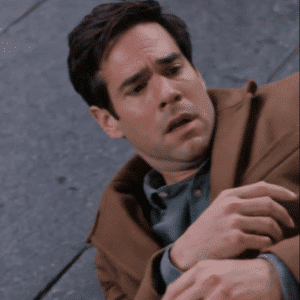
One second, Clara Bennett was walking down the gray city sidewalk with her portfolio tucked beneath one arm and rain tapping against the shoulders of her tan trench coat.
The next, a wave of muddy water rose from the curb and slammed into her.
It covered everything.
Her coat. Her dress. Her hands. The leather portfolio she had guarded against the rain like it contained her entire future.
For a moment, Clara just stood there.
Rain fell into her lashes. Brown water dripped from the hem of her coat onto the sidewalk. Pedestrians slowed, stared, then hurried on with the guilty speed of people who had decided someone else’s humiliation was none of their business.
The SUV stopped half a car length ahead.
Its brake lights burned red in the wet street.
Clara turned toward it, shaking with shock and anger.
“What is wrong with you?”
The driver’s window slid down.
A man in a black suit leaned out, handsome in the polished, impatient way of men who believed apologies were for people with time to waste. His dark hair was neat, his shirt collar crisp, his wristwatch bright against the gray morning.
He looked at Clara once.
Not at her face.
At the mess.
Then he gave a short, irritated laugh.
“I’m in a hurry!”
The window went up.
The SUV sped away, spraying another thin line of water behind it.
Clara stood on the sidewalk, soaked in mud, while the city swallowed the car.
She looked down at her hand. Thick brown streaks ran across her fingers. Her sleeve was ruined. Her coat, a gift from her mother after her first promotion, clung heavily to her shoulders.
Her eyes burned.
Not because of the coat.
Not even because of the meeting she was already almost late for.
Because the man had looked at her and decided she did not matter.
That was what humiliation really was.
Not being hurt.
Being dismissed.
Clara took one breath. Then another.
She stepped under the narrow awning of a closed café, opened her portfolio, and checked the documents inside. The outer leather was wet, but the files were safe. The contract drafts were untouched. The sealed envelope remained clean.
Good.
She removed her ruined trench coat.
The light blue dress underneath had a muddy stain on one sleeve and a smaller mark near the waist, but it was salvageable. Barely. She took a tissue from her bag and wiped her hands until the skin turned red. Then she folded the coat over her arm, lifted her chin, and looked at the glass tower three blocks ahead.
Bennett Global Holdings.
Forty-two floors of steel, glass, and men who had spent the last six months underestimating her.
Clara walked into the lobby with mud on her sleeve and calm on her face.
The receptionist stared for half a second before remembering herself.
“Ms. Bennett, the board is already assembling upstairs.”
“I know,” Clara said.
“Do you need—”
“No.”
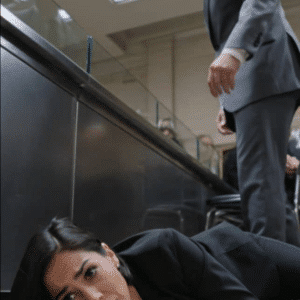
The elevator ride to the thirty-eighth floor was silent except for the soft mechanical hum and the rainwater dripping from her coat onto the polished floor.
Clara watched her reflection in the mirrored doors.
She did not look like someone about to take control of a billion-dollar company.
She looked like someone the city had stepped on.
Maybe that was perfect.
When the elevator opened, she handed the ruined coat to her assistant without breaking stride.
“Have this sent out, please.”
Her assistant, Nina, looked horrified. “What happened?”
“Traffic.”
Clara moved toward the boardroom.
Behind the glass walls, eight men in dark suits sat around the long conference table, each with a folder in front of him and a practiced expression of importance. At the far end, the city skyline blurred behind rain.
The room quieted when Clara entered.
She walked to the head of the table.
Set down her portfolio.
Smoothed the front of her blue dress.
“Good morning.”
A few board members stood politely. A few did not. One, Richard Vale, looked at his watch.
Before anyone could speak, the door burst open behind her.
The driver rushed in.
His breath was sharp. His black suit jacket was damp from rain. Mud stained the bottom of his trousers, splashed across the expensive fabric like evidence.
“I apologize,” he said quickly, not yet looking at Clara. “Traffic was impossible, and there was—”
He stopped.
His eyes found her.
Then her sleeve.
Then her face.
The blood drained from his.
Clara looked at him with perfect stillness.
The man who had splashed her with mud less than fifteen minutes earlier was now standing in her boardroom, staring at her like a condemned man who had recognized the judge.
Richard Vale cleared his throat.
“Ah. Mr. Harrington. Glad you could join us.”
The driver did not answer.
Clara picked up her brown leather portfolio, casually covering the stained sleeve.
Then she smiled.
Not warmly.
Not cruelly.
Professionally.
“Shall we begin?”
And Thomas Harrington realized his hurry had just delivered him to the one woman he could not afford to offend.
Act II
Thomas Harrington had spent his whole life practicing entrances.
He knew how to walk into a room half a second late and make it seem intentional. He knew how to shake hands with older men and make them feel wise, how to flatter powerful women without sounding obvious, how to speak in calm, expensive phrases that made greed sound like strategy.
He was thirty-six years old and already being spoken of as the future of Bennett Global.
Not officially.
Never officially.
But in private dinners, golf club conversations, and careful phone calls, his name kept appearing.
Thomas was Richard Vale’s protégé.
That alone opened doors.
Richard was the oldest member of the board, a man with silver hair, cold eyes, and a smile that could turn into a weapon without warning. He had worked beside Clara’s father for thirty years and had spent the last five convincing everyone that he, not the Bennett family, understood the company’s future.
Then Edward Bennett died.
A sudden heart attack in his study, one month before the company’s largest acquisition vote.
The city mourned him publicly.
The board reorganized privately.
To most outsiders, Clara Bennett was an elegant footnote. Edward’s only child. Educated, capable, certainly, but young. Too young, the men whispered. Too emotional after her father’s death. Too inexperienced to lead a corporation with interests across logistics, medical technology, renewable infrastructure, and private equity.
They had not noticed she had been running half of it from the shadows for years.
Edward had.
That was why his will shocked them.
He left Clara voting control of the family shares, enough to determine the fate of the company if she used them with precision. He named her interim chair pending the emergency board review. And he gave her thirty days to examine the proposed merger Richard Vale had pushed with almost religious intensity.
The merger looked beautiful on paper.
That was the problem.
Beautiful deals often hid ugly rooms behind them.
Clara had begun finding those rooms within a week.
Shell companies. Inflated consulting fees. A supplier network connected to Harrington Strategic Partners, Thomas’s firm. Offshore transfers disguised as due diligence expenses. A series of rushed approvals signed during the final months of Edward’s life, when he had been ill, exhausted, and trusting the wrong people.
Thomas Harrington was not merely late to the board meeting.
He was the reason it existed.
His firm had been chosen to lead the acquisition strategy. He had been positioned as the bridge between old Bennett stability and new market aggression. If the vote passed that morning, Harrington Strategic would earn a staggering advisory fee, Richard Vale would secure a private equity back channel worth millions, and Clara’s influence would be diluted before she fully understood how it had happened.
At least, that was what they believed.
Thomas did not know Clara had spent the last three weeks sleeping four hours a night, tracing signatures and payments with her father’s former assistant, Nina, and an outside forensic accountant whose name appeared on no company calendar.
He did not know Edward had suspected betrayal before he died.
And he certainly did not know what was inside the sealed envelope in Clara’s leather portfolio.
To Thomas, the woman on the sidewalk had been a delay.
An inconvenience.
A pedestrian in the rain.
He had not seen the face behind the mud because men like Thomas rarely looked closely at people they could leave behind.
That had always been his gift.
And his weakness.
Clara understood men like him because her father had raised her around them. She had grown up in hallways outside closed doors, watching the performance of corporate loyalty. She learned early that betrayal did not arrive with shouting. It arrived with handshakes, birthday cards, sympathetic voices after funerals.
Richard Vale had hugged her at Edward’s memorial.
“My dear,” he had murmured, “your father trusted me completely.”
Clara had smiled through grief.
“Yes,” she said. “That is what worries me.”
He had laughed, thinking she was joking.
She had not been.
The boardroom that morning was not just a meeting.
It was a trap.
The only question was whether Thomas had realized he had walked into it already covered in mud.
Act III
Clara let the silence work.
It spread through the boardroom slowly, touching each man at the table.
Thomas remained near the door, one hand still on the handle, as if some part of him believed he could step backward and undo the morning. Mud marked his trousers. Rain darkened his shoulders. His expression flickered between panic and calculation.
Clara gestured to the empty chair beside Richard.
“Please, Mr. Harrington. We were waiting for you.”
The phrase landed carefully.
Waiting.
The board members looked between them.
Richard’s eyes narrowed. He sensed something but could not yet name it.
Thomas moved to his seat. Each step seemed louder than it should have been. He sat down, opened his folder, and tried to regain the face he had worn into a hundred meetings.
But his eyes kept returning to Clara’s sleeve.
She noticed.
Of course she did.
Clara opened her portfolio.
“Gentlemen, we are here to vote on the proposed acquisition of Meridian Core Systems and the associated advisory agreements with Harrington Strategic Partners.”
Richard leaned back. “As circulated and discussed extensively.”
“Yes,” Clara said. “Extensively.”
A faint edge entered the room.
Thomas straightened.
Clara slid a packet across the table to each board member.
“This morning, before any vote is taken, I would like to review several irregularities discovered in the final version of the agreement.”
Richard smiled.
The condescending one.
“Clara, we have gone through the agreement line by line. Delaying further may damage market confidence.”
“I agree,” she said. “Delay can be damaging.”
Thomas looked relieved for half a second.
Then Clara added, “So can fraud.”
No one moved.
The rain tapped against the glass walls.
Richard’s smile faded.
“Careful.”
Clara looked at him. “Always.”
She tapped the first page.
“Harrington Strategic Partners was contracted as an independent adviser. Yet three entities receiving success-based payments under the Meridian acquisition are registered through holding companies linked to Mr. Harrington’s managing director.”
Thomas laughed once, too loudly.
“That is a wild mischaracterization.”
“Then you will be happy to explain it.”
He opened his mouth.
Nothing came out.
Clara continued.
“Second, Meridian’s liabilities were understated by approximately two hundred million dollars through vendor-side restructuring that appears to have been timed around our internal review.”
One board member sat forward.
“Two hundred million?”
“Yes,” Clara said. “Conservatively.”
Richard’s voice sharpened. “Where did you get these numbers?”
“From Meridian’s amended debt filings, the version not included in Mr. Harrington’s board packet.”
Thomas turned to Richard.
It was subtle.
But Clara saw it.
A child looking toward the adult who promised the lie would hold.
She changed slides on the boardroom screen.
A chart appeared.
Payments. Entities. Dates. Signatures.
The room became very still.
“Third,” Clara said, “several consulting payments were routed through Voss & Lane Advisory, a dormant company reactivated three months ago.”
Richard’s hand tightened around his pen.
Clara looked at him.
“Voss & Lane was created twelve years ago by your son-in-law, Mr. Vale.”
Now the board fully turned toward Richard.
Richard did not blink.
“This is absurd.”
“It is documented.”
“It is a smear.”
“It is a pattern.”
Thomas stood abruptly.
“This is beyond inappropriate. We came here to discuss an acquisition, not indulge a grieving daughter’s paranoia.”
There it was.
The mistake.
Clara looked at him.
Not angrily.
Almost sadly.
“A grieving daughter,” she repeated.
Thomas realized too late that he had said the quiet part too clearly.
Clara reached into her portfolio and removed the sealed envelope.
“My father was many things,” she said. “Trusting, sometimes. Proud. Far too loyal to men who mistook loyalty for permission.”
She opened the envelope.
“But he was not careless.”
Inside was a letter.
Handwritten.
Clara unfolded it with steady fingers, though every part of her wanted to shake.
“This was given to me by my father’s physician after his death. He wrote it two days before the heart attack.”
Richard’s face changed.
Just slightly.
Enough.
Clara read aloud.
Clara,
If anything happens before the Meridian vote, pause the deal. Do not trust Richard’s numbers. Do not trust Harrington’s urgency. Someone is pushing this through because the truth cannot survive another quarter.
A board member whispered, “My God.”
Clara’s voice almost broke on the next line, but she held it.
I should have listened to you sooner. You see people more clearly than I do. That may save the company. It may also save you from becoming sentimental about men who are already selling pieces of your future.
She lowered the letter.
Thomas’s face was pale.
Richard looked old for the first time.
Clara placed the letter on the table.
“My father asked for one thing. Time. Today, I am using that time.”
Richard rose slowly.
“You have no authority to suspend this vote.”
Clara met his eyes.
“I have controlling voting authority under the Bennett trust.”
“Temporary authority.”
“Still authority.”
“This will destroy confidence.”
“No,” Clara said. “What destroys confidence is corruption wearing a company badge.”
Thomas gripped the back of his chair.
His trousers were still stained with mud.
Clara looked at them, then back to his face.
“And sometimes,” she added, “the mess people make on the way in tells you exactly who they are before they speak.”
Act IV
Thomas tried to save himself first.
People like him always did.
He pushed his chair back and spread his hands with an expression practiced before mirrors and investors.
“Ms. Bennett, I understand this is emotional for you. You suffered a loss. You are under tremendous pressure. Perhaps this morning’s little accident outside has colored—”
Clara lifted one eyebrow.
“Little accident?”
The board members looked up.
Thomas stopped.
Too late again.
Richard closed his eyes.
Clara allowed the room to wait.
Thomas’s mouth tightened.
“I mean, clearly, there was some incident before the meeting. I was not aware it was you.”
That was the first apology.
Not for what he did.
For recognizing the wrong target.
Clara smiled faintly.
“No. You weren’t.”
A silence followed, brutal in its simplicity.
Then Nina opened the boardroom door.
She entered with a tablet in one hand and Clara’s ruined trench coat over the other arm. The coat had been placed in a garment bag, but the mud was still visible through the clear plastic, smeared across the fabric like an exhibit.
Thomas stared at it.
Nina set the tablet before Clara.
“The lobby security feed is ready.”
Thomas’s voice dropped.
“Is this really necessary?”
Clara looked at him.
“That depends. Are you still in a hurry?”
No one at the table spoke.
Clara tapped the screen.
The boardroom display changed.
There was the rainy street outside the building. Clara walking along the sidewalk. Thomas’s black SUV cutting close to the curb. The puddle exploding upward. Clara drenched. Thomas leaning from the window, saying something that had no audio but needed none.
Then the SUV sped away.
The video stopped.
A small cruelty.
Ordinary. Petty. Easy to dismiss.
But in that room, attached to everything else, it became a portrait.
One board member, Samuel Price, removed his glasses.
“Mr. Harrington,” he said quietly, “was that you?”
Thomas exhaled sharply.
“This is childish.”
“No,” Clara said. “Childish is splashing a stranger with mud and speeding away. Relevant is what came next.”
Nina changed the display again.
A second video.
Parking garage.
Thomas’s SUV entering the executive level.
He parked across two reserved spaces, exited the car, looked at his stained trousers, cursed, and made a phone call.
This video had audio.
Thomas’s voice filled the room.
“I don’t care if she’s here already. Richard said we have the votes. Push it through before Bennett starts asking questions. She’s emotional, and half the board thinks she’s decoration anyway.”
No one breathed.
Thomas looked like he might be sick.
Richard slammed a hand on the table.
“This meeting is over.”
Clara did not raise her voice.
“Sit down, Richard.”
He froze.
Every man in the room turned toward her.
For decades, Richard Vale had interrupted, corrected, guided, and overruled. He had mistaken Clara’s politeness for weakness because it was easier than admitting he had never really known her.
Now she stood at the head of the table in a stained blue dress and did not move.
“Sit,” she repeated.
Richard sat.
That was the moment power changed hands.
Not legally.
That had happened when Edward signed the trust papers.
This was deeper.
The room felt it.
Clara opened another folder.
“I have already referred these materials to outside counsel. Effective immediately, I am suspending the Meridian vote, terminating Harrington Strategic Partners for cause, and requesting this board authorize a full independent investigation into all acquisition-related payments.”
Thomas shook his head.
“You can’t terminate us without review.”
“Your contract includes a morality clause, a conflict disclosure clause, and a reputational harm provision.” Clara glanced at his trousers. “You have had an unusually productive morning violating all three.”
Samuel Price coughed into his hand, almost a laugh.
Thomas glared at him.
Richard leaned forward.
“You are making a reckless mistake. Your father built this company with men like me.”
Clara’s expression changed.
There was grief in it now.
But not softness.
“My father built this company,” she said, “despite men like you.”
Richard’s face flushed.
“You arrogant little—”
“Careful,” Clara said.
One word.
He stopped.
Because the general counsel had entered the room behind Nina.
So had two security officers.
And a woman in a navy suit Clara had never met in person until that morning.
Federal financial crimes division.
Thomas saw the badge first.
The terror that crossed his face was no longer social.
It was legal.
Richard turned slowly.
“Clara,” he said, and for the first time his voice held something like pleading. “We can handle this internally.”
She looked at her father’s letter on the table.
Then at the board.
Then at the mud drying on Thomas Harrington’s expensive suit.
“No,” she said. “That is how it survived.”
Act V
Thomas Harrington did not leave the boardroom as a future industry leader.
He left escorted by security, still insisting he had done nothing wrong, still trying to catch Richard’s eye, still speaking in phrases designed for damage control.
Misunderstanding.
Context.
Preliminary documentation.
Personal vendetta.
By the time he reached the elevator, his voice had begun to crack.
Richard Vale lasted another thirteen minutes.
He tried procedure. Then intimidation. Then nostalgia.
He spoke of Edward. Of loyalty. Of storms weathered together. He said Clara’s father would have wanted dignity.
That was when Clara finally lost the last trace of warmth in her face.
“My father asked for truth,” she said. “Dignity can follow if it survives.”
The vote was taken.
Not on Meridian.
On the investigation.
Unanimous.
Even Richard raised his hand after realizing no one would stand with him.
He resigned before lunch.
By afternoon, the financial press had the story. Not all of it, but enough. Bennett Global suspends major acquisition pending fraud inquiry. Advisory firm terminated. Longtime board director steps aside.
Clara did not watch the coverage.
She sat alone in her father’s old office, the city still blurred by rain beyond the windows, and placed his letter on the desk.
For the first time all morning, her hands shook.
Not from fear.
From the delayed violence of holding herself together while people tried to make her doubt what she knew.
Nina came in quietly.
“They’re asking whether you want to make a statement.”
Clara laughed once.
It sounded exhausted.
“They?”
“Everyone.”
Of course.
Everyone wanted a statement after the truth became public enough to be useful.
Where were they when she had been called too young?
Too emotional?
Decoration?
Where were they when her father’s name was being used as a curtain for theft?
Clara looked down at the mud stain on her sleeve.
It had dried now, dark at the edges.
“I need ten minutes.”
Nina nodded.
Before she left, she glanced at the sleeve.
“For what it’s worth,” she said, “you handled that beautifully.”
Clara looked up.
“I was covered in mud.”
“Yes,” Nina said. “And somehow they looked dirtier.”
After she left, Clara let herself cry.
Only for a minute.
Not because she was weak.
Because her father was gone, and victory did not bring him back.
It did not give her the final conversation she wanted. It did not let her ask whether he had been afraid when he wrote the letter. It did not erase the fact that he had trusted Richard for thirty years and doubted Clara for too many of them.
But it gave her one thing.
A chance to protect what he had left behind.
That would have to be enough.
The investigation grew teeth within days.
Harrington Strategic Partners collapsed under subpoenas. Meridian’s executive team scrambled to distance themselves from the manipulated liabilities. Richard’s son-in-law fled to Switzerland and returned three weeks later with lawyers who looked more expensive than optimistic.
Thomas gave interviews at first.
He called Clara vindictive.
He said she had weaponized a minor street incident to distract from her lack of experience.
Then the parking garage audio leaked.
After that, he stopped speaking publicly.
The internet, far less dignified than the boardroom, gave him a name by sunset.
Mud Man.
Clara hated that part.
Not because she felt sorry for him.
Because it made the story too small.
People wanted the satisfying version. Rude man splashes woman. Woman turns out to be his boss. Instant karma.
It was catchy.
It was clean.
It was incomplete.
The mud was never the point.
The mud was only the first honest thing Thomas Harrington had worn into that room.
Three months later, Clara stood in the same boardroom for the shareholder address.
This time, no one checked their watch when she entered.
The table had changed too. Not physically. Same glass walls. Same skyline. Same long surface polished to a cold shine.
But Richard’s chair was occupied by a woman named Denise Alvarez, a former regulator known for making comfortable men nervous. Two other directors had been replaced. The company had created a risk committee with actual power, not ceremonial language.
Nina sat near the wall, newly promoted to chief of staff.
Clara’s father’s portrait had been moved from the side hallway into the room.
Not above the table.
Beside it.
A witness, not a king.
Clara began without theatrics.
“Good morning.”
No one interrupted.
She laid out the findings. The payments. The resignations. The legal referrals. The costs. The damage.
Then she spoke about culture.
Not the empty kind found in annual reports.
The real kind.
“The danger to this company was not only that people lied,” she said. “It was that too many people created an environment where lies felt safe. Where urgency was used to silence scrutiny. Where politeness was mistaken for consent. Where the loudest person in the room was presumed to be the most qualified.”
She paused.
Her eyes moved across the table.
“That ends now.”
No one clapped.
Good.
She had not asked for performance.
After the meeting, Denise Alvarez approached her near the windows.
“You know,” Denise said, “half the room was terrified of you.”
Clara looked out at the city.
“Only half?”
Denise smiled.
“You’ll do.”
Weeks later, a package arrived at Clara’s apartment.
No return address.
Inside was her tan trench coat.
Cleaned.
Repaired.
Almost perfect.
Almost.
A faint shadow remained near the lower hem, where the mud had soaked deepest into the fabric.
There was also a note from the dry cleaner.
We did our best, but some stains do not fully lift.
Clara stood in her entryway reading that line twice.
Then she laughed.
A real laugh this time.
She kept the coat.
Not because she needed it. She could have bought another. Ten others. Better ones.
She kept it because some stains were useful.
Some reminded you where people revealed themselves.
Some reminded you that dignity was not staying spotless.
Dignity was walking into the room anyway.
A year later, Bennett Global held its annual leadership summit on a bright spring morning after two straight days of rain.
Clara arrived early.
She had become CEO by then, unanimously approved after the investigation cleared the path Richard had tried to block. The company was smaller after divesting Meridian-related assets, but cleaner. Stronger in ways markets did not always measure quickly.
As she stepped from her car, a bus passed too close to the curb.
Water leapt from a shallow puddle.
Not much.
Just enough to splash the sidewalk near her shoes.
Her new assistant gasped.
Clara looked down.
One small mark on the toe of her heel.
Nothing more.
For a moment, she remembered the rain. The black SUV. The man leaning out the window with impatience where humanity should have been.
Then she stepped over the puddle and entered the building.
Inside, young analysts hurried through the lobby with badges swinging from their necks and coffee cups in hand. One of them, a nervous woman in a navy blazer, dropped a stack of papers near the elevator.
Several people walked around her.
Clara stopped.
She bent down and helped gather the pages.
The woman looked up, mortified.
“Ms. Bennett, I’m so sorry.”
“For dropping paper?”
“I’m late for the strategy review.”
Clara handed her the stack.
“Then walk with me.”
The woman blinked.
Together, they entered the elevator.
Clara noticed the analyst’s hands trembling, the way she clutched the documents as if one mistake could cost her the room.
“What’s your name?” Clara asked.
“Maya.”
“Well, Maya,” Clara said, pressing the button for the thirty-eighth floor, “being late is survivable. Being careless with people is not.”
The elevator rose.
When the doors opened, Clara stepped into the hallway where everything had changed a year earlier.
The boardroom waited ahead.
Glass walls.
Long table.
City skyline.
No mud this time.
Only memory.
Maya paused beside her.
“Aren’t you angry when people underestimate you?”
Clara looked through the glass at the room filling with executives, investors, and directors who now stood when she entered because respect had finally caught up to authority.
“Yes,” she said.
“What do you do with it?”
Clara smiled slightly.
“I bring it to the meeting.”
Then she walked in.
At the head of the table, she set down her portfolio.
The room quieted.
Outside, the city shone after the rain.
And Clara Bennett, once left dripping on a sidewalk by a man too important to apologize, looked around at the people waiting for her to speak.
“Good morning,” she said.
This time, every voice answered.