Act I
The espresso hit the marble like a dark wound.
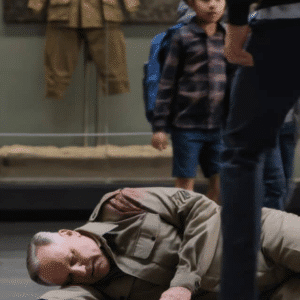
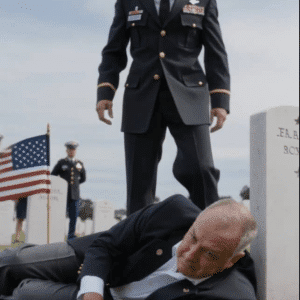
Leo was still on his knees when it happened, one hand braced against the cold white floor, the other moving a black microfiber cloth in slow circles over a smudge near the lime green Lamborghini. He had been working since dawn. His shoulders ached. His knees burned through the thin padding of his gray technician’s jumpsuit.
He had just finished polishing that exact spot.
Then Grant Harlan tilted his paper coffee cup.
The stream fell deliberately, spreading across the marble in front of Leo’s hands. It reflected the ceiling lights, the supercars, and the five salesmen standing above him in slim suits that cost more than Leo made in a month.
Grant smiled.
“Hahaha,” he said, loud enough for the showroom to hear. “You’re just a cheap worker. Clean it up again.”
The others laughed.
One of them lifted his phone and started recording.
Leo did not look up.
That was what made them angrier.
He dipped the cloth into the spill and began wiping, jaw tight, eyes fixed on the floor. The espresso soaked into the fabric and stained his fingers brown. Behind him, the Lamborghini’s sharp green body gleamed under recessed LEDs like some predatory thing waiting to be admired.
“Look at him,” one salesman said. “Doesn’t even talk back.”
“He knows his place,” another replied.
Grant stepped closer until the toe of his polished shoe nearly touched Leo’s hand.
“Careful,” he said. “That floor costs more than your family.”
Leo paused for half a second.
Only half.
Then he kept wiping.
The showroom around them was built to make people feel small. Floor-to-ceiling glass walls. Polished marble veined with gray. Cars positioned like sacred objects beneath warm, surgical light. A silver McLaren sat near the private lounge. A matte black Ferrari waited behind a velvet rope. Everything smelled faintly of leather, wax, and money.
And on that floor, in front of all of it, Leo was being taught that some men thought luxury gave them permission to be cruel.
The main glass doors opened.
A man walked in slowly.
He looked homeless.
His gray hair was tangled. His face was weathered and dirty. His brown jacket was shredded at the sleeves, stained across the chest, and hanging from his shoulders as if it had survived years of rain and sleeping rough. His pants were torn at the hem. His shoes looked ready to give out.
Every salesman turned.
The old man stopped a few feet from the group and looked at Leo on the floor.
Then he looked at the coffee spill.
Then at Grant.
“Why are you treating him this way?” he asked.
His voice was deep, steady, and dangerously calm.
Grant stared at him for one stunned second.
Then he laughed.
The others joined him, louder this time, relieved to have a new target.
Grant looked the old man up and down with disgust.
“He’s just a cleaner,” he said. “We do whatever we want here.”
The old man did not move.
Grant stepped closer, smirking.
“You want to join him on the floor, old man?”
Leo finally looked up.
Not at Grant.
At the stranger.
Something in the old man’s eyes made the entire showroom feel colder. He was still dressed in rags. Still dirty. Still standing in the same patch of bright showroom light.
But his gaze had changed.
It was not wounded.
It was measuring.
Leo rose slightly from his knees.
“Sir,” he said softly, “you don’t have to stay here.”
The old man looked down at him.
Grant scoffed. “Listen to that. The mop boy is rescuing the street trash.”
Leo’s face tightened.
But he did not answer.
He only picked up the coffee-soaked cloth, folded it once, and stood between the old man and the salesmen as if his exhausted body could offer protection.
The old man saw that.
And in that moment, the five men in suits had no idea they had just failed the only test that mattered.
Because the man they mocked was not a beggar.
His name was engraved on the deed to the building.
Act II
Leo Marquez had never wanted to clean supercars.
He wanted to build them.
When he was little, he would sit on the floor of his father’s garage and watch Daniel Marquez take engines apart with the patience of a priest handling relics. Daniel was not rich. He did not own anything more glamorous than a dented pickup and a toolbox with one broken latch.
But when he talked about machines, people listened.
“Cars don’t care what suit a man wears,” Daniel used to say. “They only answer to the hands that understand them.”
Leo grew up believing that.
Then Daniel died when Leo was thirteen, and belief became expensive.
His mother took extra shifts at a laundry. Leo started working after school, then weekends, then evenings that turned into nights. By nineteen, he had learned to swallow exhaustion without complaint. He cleaned offices, garages, storefronts, and eventually the luxury showroom of Imperial Crown Motors, the most exclusive supercar dealer in the state.
It was supposed to be temporary.
Everything poor people endure is called temporary by people who do not have to endure it.
Leo cleaned the marble by day and studied automotive engineering videos at night. He saved money in a coffee tin hidden behind the water heater. He rebuilt old carburetors from scrap parts. He sketched suspension systems on the backs of invoices.
Sometimes, after closing, when the showroom was empty and the cars sat beneath dim security lights, Leo would stand near the Lamborghini and imagine what it would feel like to belong in the room for something other than wiping fingerprints off glass.
The salesmen made sure he never imagined too long.
Grant Harlan was the worst.
He was thirty-two, handsome, polished, and cruel in the casual way of men who have never feared missing rent. He sold cars to athletes, tech founders, influencers, and men who paid extra to make sure their purchase arrived with applause. He understood status better than engineering. He could not rebuild a brake caliper, but he could tell within five seconds whether a customer wanted to be feared, envied, or forgiven.
To Grant, Leo was useful because he was beneath him.
The others followed.
Mason. Reed. Tyler. Cole.
Five men who stood in circles, laughed too loudly, and treated the showroom like a kingdom because the cars made them feel royal.
They had thrown receipts at Leo. Made him redo spotless windows. Called him “garage boy” and “minimum wage.” Once, Grant told a customer that Leo came with the building, like plumbing.
Leo reported nothing.
Not because it did not hurt.
Because he needed the job.
That morning, when Grant poured coffee on the floor, Leo had been running on three hours of sleep. His mother’s blood pressure medication had gone up again. His college application sat unfinished on the kitchen table because the application fee felt like a luxury.
So he cleaned.
Then the old man walked in.
The stranger watched everything with the stillness of someone recording details no camera could catch.
After Grant insulted him, Leo quietly grabbed a clean towel from his cart and handed it over.
“For your hands,” Leo said.
The old man looked at the towel.
Then at Leo’s face.
“You’re the one on the floor,” he said.
Leo gave the smallest shrug.
“You look colder than me.”
Grant groaned. “Touching. Can you two take this charity commercial outside?”
The old man ignored him.
“What’s your name, son?”
“Leo.”
“Leo what?”
“Marquez.”
The old man’s expression shifted.
Just slightly.
“Marquez,” he repeated.
Leo nodded.
Grant clapped his hands once.
“Story time is over. Clean the spill and escort Grandpa out before he scares off actual buyers.”
Leo reached for the mop.
The old man caught his wrist.
Not hard. Not threatening.
Just enough to stop him.
“Who taught you to keep your head when people try to drag it down?” he asked.
Leo hesitated.
“My father.”
“What was his name?”
“Daniel Marquez.”
This time, the old man did not hide the reaction.
Something passed through his face so quickly Leo almost missed it. Shock. Pain. Recognition.
Before Leo could ask, the old man turned and walked toward the glass doors.
Grant called after him, laughing.
“Don’t come back unless you can afford the air in here!”
The old man paused at the entrance.
He did not turn around.
“Oh,” he said softly. “I can afford it.”
Then he stepped into the sunlight.
And by late afternoon, the showroom would learn exactly what that meant.
Act III
The old man’s real name was Elias Ward.
Twenty-six years earlier, before the glass walls and marble floors, before the private elevators and seven-figure commissions, Imperial Crown Motors had been a failing service garage on the edge of Phoenix with three lifts, a leaking roof, and one imported Ferrari nobody in town knew how to repair.
Elias owned the debt.
Daniel Marquez owned the skill.
Daniel was the first mechanic who believed the garage could become something more than a place rich men brought broken toys. He worked late without being asked. He taught younger technicians. He argued with Elias about safety, honesty, and the kind of men they were willing to sell machines to.
“Luxury without dignity is just expensive trash,” Daniel once told him.
Elias never forgot it.
Or he thought he hadn’t.
Then the company grew.
One showroom became three. Three became twelve. Investors arrived. Lawyers arrived. Men with perfect hair and empty hands arrived. They talked about brand elevation, client psychology, and excluding anyone who did not match the image.
The service bays were moved out of sight.
The mechanics stopped attending launch events.
The sales floor became the temple.
The workers who kept it alive became invisible.
By the time Daniel died, Elias had already stepped back from daily operations. He sent flowers. He approved a small internal memorial. He meant to call the family and never did. Work swallowed intention. Wealth softened guilt. Years passed.
Then, six months before the coffee hit the marble, Elias began receiving anonymous complaints.
Not from customers.
From janitors. Detailers. junior technicians. reception staff. People who wrote in broken sentences from private email addresses because they were afraid of losing jobs that barely held their lives together.
They described the California showroom.
Workers mocked. Pay withheld. Cleaning staff forced to redo work as punishment. Junior mechanics ordered to stay silent when salesmen lied about vehicle histories. Customers judged by clothes before credit. Staff told that kindness was bad for exclusivity.
At first, Elias sent auditors.
The reports came back clean.
Too clean.
So he went himself.
Not as Elias Ward.
As a man no one would bother pretending for.
He arrived in a shredded jacket, with dirt on his face and old shoes on his feet. He expected discomfort. Maybe polite dismissal. Maybe security.
He did not expect to see a young man on his knees while five salesmen laughed and filmed him.
He did not expect the young man to be Daniel Marquez’s son.
That afternoon, Elias returned to his private office across town and locked the door.
His assistant found him staring at an old photograph from the company archive.
Daniel Marquez stood beside him in front of the first Imperial Crown garage, sleeves rolled up, grease on his arms, one hand resting on the hood of a half-rebuilt Ferrari. Both men looked younger. Hungrier. Better.
On the back, in Daniel’s handwriting, was one sentence:
Don’t let the showroom forget the shop.
Elias sat with that sentence for a long time.
Then he made phone calls.
Legal.
Security.
Human resources.
The board.
The private investigators already reviewing the California branch.
By four o’clock, showroom cameras had been pulled. Phone footage from the salesmen’s own devices had been preserved through the company network. Payroll records were opened. Commission files were flagged. Complaints buried by the local manager were recovered from deleted folders.
The coffee spill was only the beginning.
Grant Harlan and his circle had been doing more than humiliating workers. They had been inflating customer deposits, hiding damage disclosures, pressuring technicians to sign off on rushed inspections, and using junior staff as scapegoats when clients complained.
Cruelty had been the symptom.
Corruption was the disease.
At 5:17 p.m., a matte-gray supercar glided toward the showroom’s front doors.
It moved almost silently, low and futuristic beneath the golden-hour sun. Its four gull-wing doors rose at once with a mechanical hum. Every salesman inside turned toward the glass.
Grant stepped forward, smoothing his tie.
A car like that did not arrive without money attached.
Then the rear door opened.
A man in a flawless charcoal suit stepped out.
Crisp white shirt. Gold watch. Black sunglasses. A gold pin on his lapel reading CEO OWNER.
Grant’s smile faltered.
The man removed his sunglasses.
And the face beneath them was the same face Grant had called street trash that morning.
Act IV
No one laughed this time.
Elias Ward walked through the glass doors with three attorneys, two security directors, and the regional operations chief behind him. The showroom’s warm lights caught the gold pin on his lapel and threw it back across the marble like a warning.
Grant’s mouth opened.
Nothing came out.
Elias stopped at the exact spot where the coffee had been poured.
The floor was spotless now.
That made it worse.
“Mr. Harlan,” Elias said.
Grant swallowed.
“Mr. Ward, I—”
“You asked me this morning if I wanted to join him on the floor.”
Grant’s face went pale.
Elias looked around at the Lamborghinis, the McLaren, the Ferrari, the perfect glass cases of branded merchandise, the marble polished so brightly it reflected everyone’s shoes.
“I started on floors like this,” Elias said. “Before the suits. Before the cars. Before men like you mistook proximity to wealth for worth.”
The other salesmen stood frozen behind Grant.
Mason lowered his phone as if the device itself had betrayed him.
Elias turned toward Leo, who was standing near the service hallway with a mop handle in his hand. Leo looked terrified, as if rich men arriving in formation could only mean someone like him was about to be blamed.
Elias’s voice softened.
“Leo Marquez. Come here, please.”
Leo stepped forward slowly.
Every eye in the showroom followed him.
Grant looked at him with sudden panic, the kind that comes when a person realizes the floor beneath someone else might become the floor beneath him.
Elias faced the room.
“This morning, five employees of this branch publicly humiliated a worker. They recorded it for entertainment. They used company property as a stage for cruelty.”
He turned to the attorneys.
“But that is not all they did.”
One of the attorneys opened a tablet and began reading.
Misrepresented vehicle condition reports.
Suppressed service warnings.
Retaliated against support staff.
Deleted worker complaints.
Manipulated commissions.
The words fell one by one, clean and devastating.
Grant shook his head.
“That’s not accurate. We move volume. Everyone knows how this business works.”
Elias’s eyes hardened.
“No. Everyone knows how you work.”
Mason spoke up, desperate.
“Sir, the cleaner thing was a joke.”
Leo looked down.
Elias saw it.
“A joke requires everyone to be allowed to laugh,” he said.
No one spoke.
Grant’s fear turned to anger.
“With respect, Mr. Ward, you don’t understand the floor anymore. These clients expect confidence. They expect a certain image. We can’t have every employee acting like we’re running a soup kitchen.”
Elias stepped closer.
The room seemed to shrink around him.
“Daniel Marquez built the first reputation this company ever had with grease under his nails,” he said. “He could tune an engine by ear, rebuild a gearbox blindfolded, and tell whether a man was honest by how he spoke to the person holding the rag.”
Leo’s head lifted.
Elias looked at him.
“Your father was my friend.”
The mop handle slipped slightly in Leo’s hand.
“My father?”
“Yes,” Elias said. “And I failed him when I allowed this company to become a place where his son could be degraded on a floor his work helped pay for.”
Leo’s face changed.
Not happiness.
Not yet.
Something heavier. Something that hurt before it healed.
Grant tried to interrupt.
Elias raised one hand.
“You and the four men behind you are terminated for cause, effective immediately. Your commissions are frozen pending audit. Your access cards are disabled. Legal will determine what is civil and what is criminal.”
The men stared at him.
For the first time all day, they looked small in their expensive suits.
Security stepped forward.
Grant looked toward Leo, hatred and humiliation twisting his face.
“This is because of you.”
Leo flinched.
Elias’s voice cut in.
“No. This is because of you.”
Grant had no answer.
As security escorted the salesmen toward the exit, customers and staff watched in stunned silence. The marble reflected their retreat. Five polished men walking out past the cars they had thought made them untouchable.
At the door, Grant looked back once.
Elias did not.
He was looking at Leo.
“Your father left something behind,” Elias said.
Leo’s eyes filled.
“What?”
Elias reached into his jacket and removed a folded, oil-stained paper sealed in a protective sleeve.
“It was in the first garage archive,” he said. “I should have given it to your family years ago.”
Leo took it with trembling hands.
The handwriting was his father’s.
And before he even read the first line, Leo knew the day had stopped being about revenge.
Act V
The letter began with an apology.
Not from Daniel to Leo.
From Daniel to the future.
If this place ever becomes too clean for working hands, then we built it wrong.
Leo read the sentence three times.
His father had written the letter during Imperial Crown’s first expansion, when the original garage was being replaced by a polished dealership. It was not angry. It was not bitter. It was a warning from a man who understood how easily success could forget the people who made it possible.
He had written about mechanics.
Cleaners.
Detailers.
Parts runners.
Receptionists.
The people who arrived before the lights came on and left after the wealthy had driven away.
A car may be sold by a man in a suit, Daniel wrote, but it is trusted because of the hands no customer sees.
Leo stood in the center of the showroom with tears running silently down his face.
For years, he had remembered his father through tools, stories, and the smell of motor oil. Now his father’s voice had reached him in a room where he had spent months being treated like he had no name.
Elias did not rush him.
The whole showroom waited.
When Leo finally lowered the letter, Elias spoke gently.
“I created a technical scholarship in your father’s name after he passed. It was poorly managed. Your family was never contacted. That failure is mine.”
Leo wiped his cheek with the back of his hand.
“I didn’t know anyone here remembered him.”
“I remembered the wrong way,” Elias said. “In speeches. In plaques. In private guilt. Not in policy. Not where it mattered.”
He turned toward the staff gathered near the service hallway.
“That changes today.”
Within a week, the showroom changed so completely that clients noticed before the new signs even went up.
The service wing was renamed the Daniel Marquez Technical Center.
Not hidden in the back.
Moved behind glass.
Customers waiting to buy seven-figure cars could now see technicians working with precision and pride. The people who maintained the machines were no longer treated like shadows behind the spectacle.
Support staff received direct contracts instead of disposable subcontractor arrangements. Wages were raised. Anonymous complaints went to an outside ethics board. Every sales hire had to spend two weeks in the service department before touching a client account.
Grant would have called it humiliating.
Elias called it education.
As for Leo, Elias offered him the scholarship his father had never known existed, full tuition for automotive engineering, and a paid apprenticeship in the restoration division.
Leo stared at the paperwork as if it might vanish.
“I can’t just accept all this,” he said.
Elias almost smiled.
“That is exactly what your father would have said.”
Leo looked at the showroom floor, at the spot where the coffee had been poured.
Then he said, “I want one more thing.”
Elias nodded.
“Name it.”
Leo’s voice was quiet but steady.
“Don’t make this about me. Make sure nobody else ever has to stand where I stood.”
Elias studied him for a long moment.
Then he said, “That is the first leadership decision you’ve made here.”
Months later, Leo returned to the showroom wearing a clean technician’s uniform with his name embroidered over the chest.
Leo Marquez.
Apprentice Engineer.
He still polished cars sometimes, but never as punishment. He did it because his father had taught him that care was not shameful work. He did it because touching the machines reminded him why he had started dreaming in the first place.
One morning, a new salesman complained that the service training was unnecessary.
Leo heard him.
So did Elias, who happened to be standing by the McLaren with a cup of black coffee in his hand.
The salesman saw them both and went silent.
Elias looked at Leo.
Leo looked at the floor.
Then both men smiled.
No coffee was spilled.
On the anniversary of Daniel Marquez’s death, the company held a small ceremony in the showroom. Not a gala. No champagne towers. No influencers leaning against cars they could not spell.
Just staff, family, technicians, and a few customers who understood that the most valuable things in the building were not the ones with price tags.
Leo’s mother came in a blue dress and cried when she saw Daniel’s letter framed beside the entrance to the technical center.
Beneath it, Elias had added a new line:
Luxury without dignity is expensive trash.
Leo stood beside his mother, one arm around her shoulders.
Across the showroom, the marble gleamed. The cars reflected in it like jewels. The glass walls opened to a bright afternoon, the same kind of sunlight that had poured through on the day Leo had been made to kneel.
Only now, when he looked at the floor, he did not see humiliation.
He saw proof.
Proof that cruelty can rule a room only until someone with power decides to value character over performance.
Proof that a worker’s silence is not weakness.
Proof that a name can wait years beneath polished marble and still rise.
Near closing time, Elias found Leo in the service bay, studying the exposed engine of a restored Ferrari.
“You know,” Elias said, “your father once told me the best machines reveal the truth about the people around them.”
Leo looked up.
“What did he mean?”
Elias glanced toward the showroom.
“Some people see a car and ask what it says about them. Others ask how to care for it properly.”
Leo smiled faintly.
“My dad would’ve liked that.”
“He said it better.”
For a while, they stood quietly beside the engine.
Then Leo reached for a tool.
His hands were still rough. Still calloused. Still the hands of someone who had worked too hard too young. But now, under the clean white lights, nobody mistook those hands for something low.
They were building hands.
His father’s hands.
And in a showroom once ruled by men who thought money made them powerful, Leo Marquez finally understood the truth.
The most expensive cars in the world could shine under glass.
But dignity, once restored, lit up the whole room.